
Let me explain
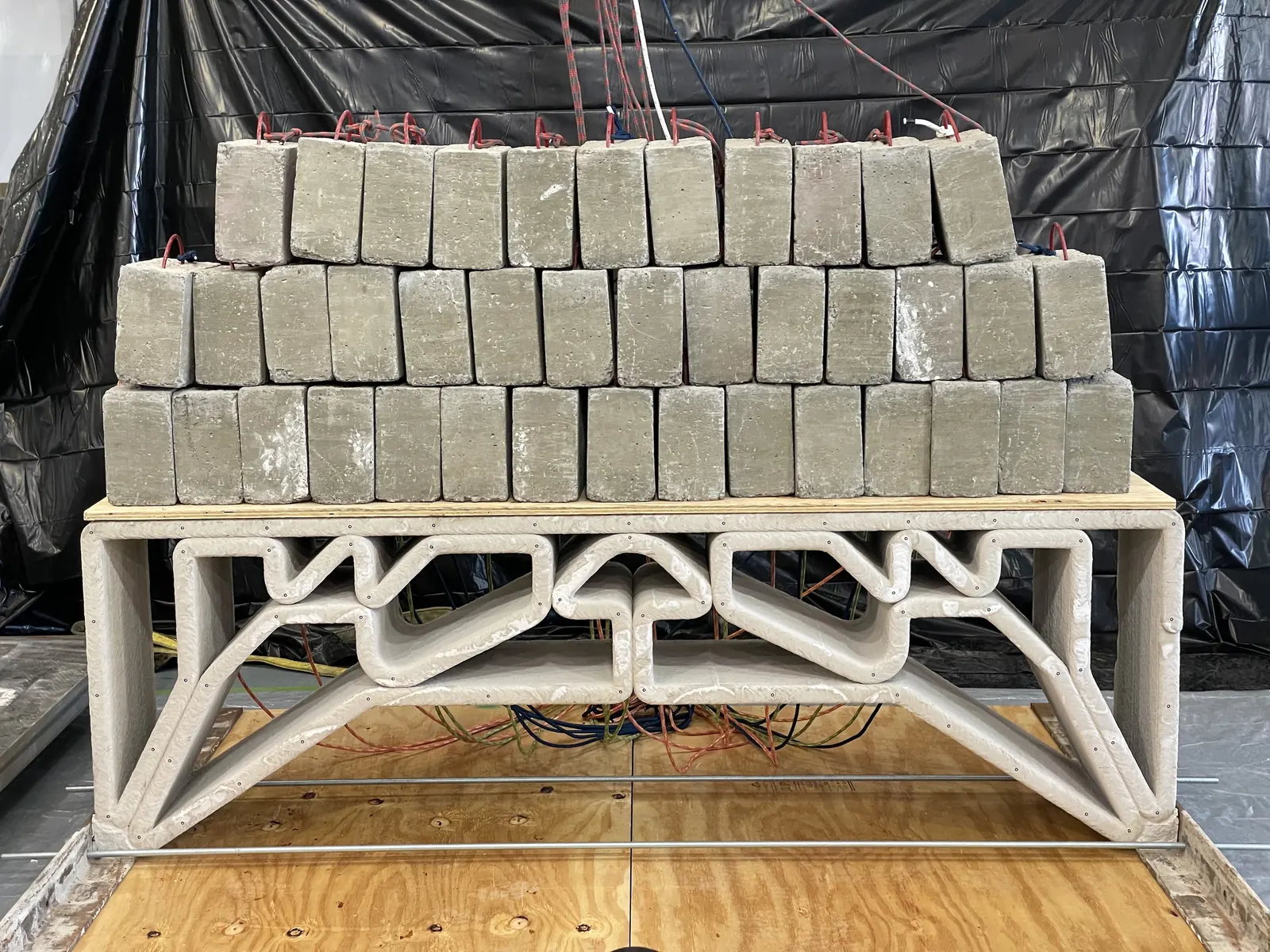
Three printer limits, bead thickness, how sharply the nozzle can turn and printing in one continuous line, were turned into equations, and every part of the bridge works in compression only. In testing, the bridge held more than 2,000 pounds with virtually no measurable bending. The analysis showed that printing a 1 cm bead instead of the 4 cm bead used could cut material use by as much as 76 percent while staying within safety margins, a roadmap for printer makers to cut concrete's carbon footprint. Team: Hajin Kim-Tackowiak, Zane Schemmer, Josephine Carstensen, Pittipat Wongsittikan and Jackson Jewett.