
News
Construction Tech

Building techniques: more than two million handmade mud bricks restored At-Turaif in Diriyah, fermented 30 days, dried 7, averaging 7 N/mm2 without cement

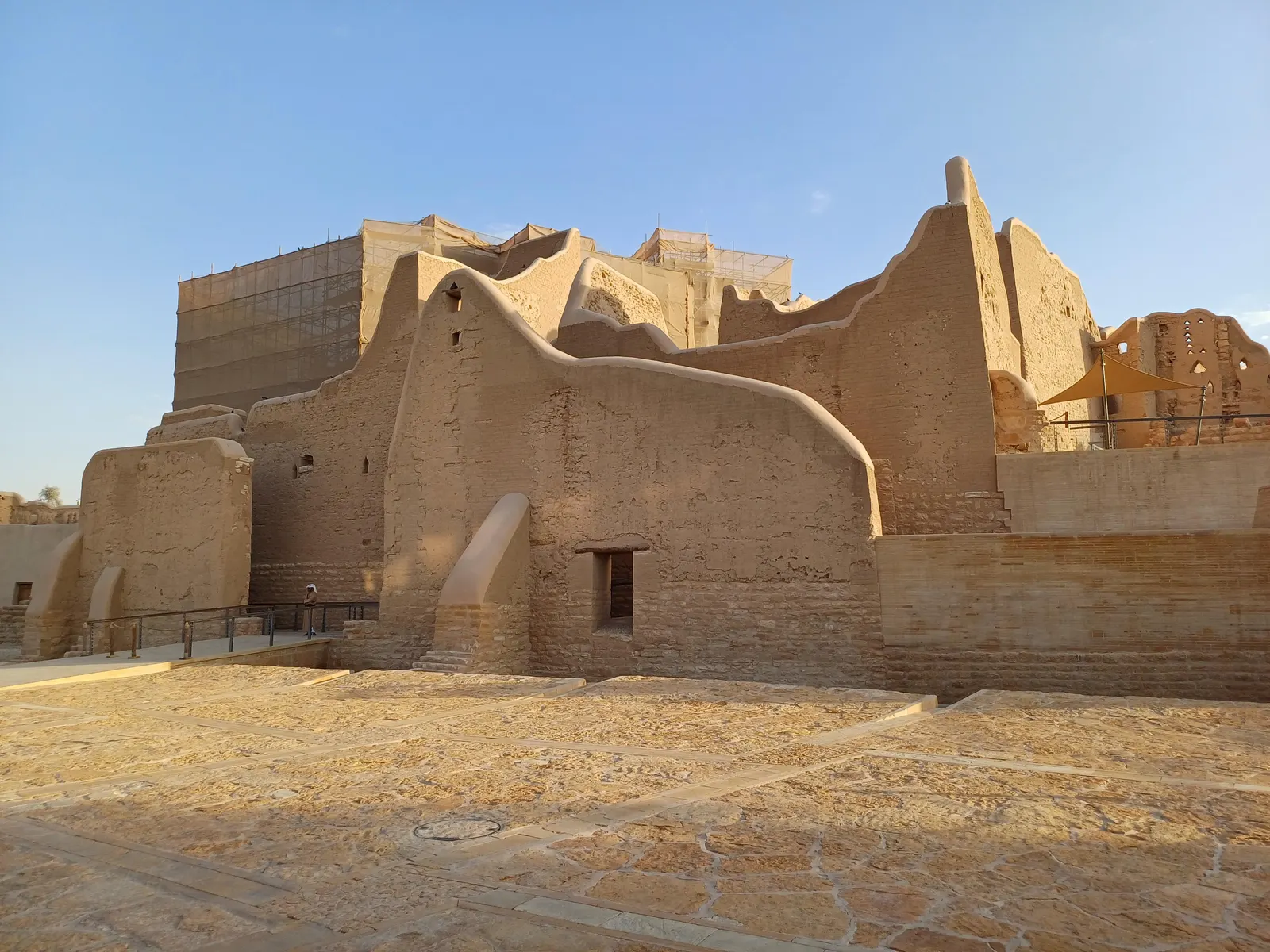
For the restoration of the At-Turaif district in Diriyah, a UNESCO World Heritage Site, UNESCO's conditions required historical materials and methods: more than two million traditional mud bricks were made by hand from clay, sand, straw and water, with a 30-day fermentation and a 7-day drying process, and almost no modern equipment.

Restored mud brick palace walls in At-Turaif, Diriyah
Photo: Radosław Botev, CC BY 3.0 PL, via Wikimedia Commons
WHY IT MATTERS

Let me explain

The mud blocks averaged a compressive strength of 7 N/mm2 after 30 days, above many masonry blocks, with no cement or aggregate: the strength comes from the natural reaction between clay, straw and water. More than 35,000 Athel trees were cut for roof joists, doors, windows, lintels and strengthening (Buro Happold). UNESCO cites the use of adobe in major palatial complexes as part of At-Turaif's value, and Diriyah Company notes walls exceeding a metre in some sections that absorb heat slowly by day and release it through the night, shaded courtyards and high openings that draw hot air out.