
News
Technology

Materials of the future: concrete that heals itself, with bacteria in the mix sealing cracks up to 0.8 mm with limestone

A research team at Delft University of Technology in the Netherlands, including researcher Henk Jonkers, developed a self-healing concrete that contains spores of alkali-resistant bacteria together with calcium lactate as their food. When a crack lets water in, the spores become active and the bacteria turn the food into limestone (calcium carbonate) that seals the crack.

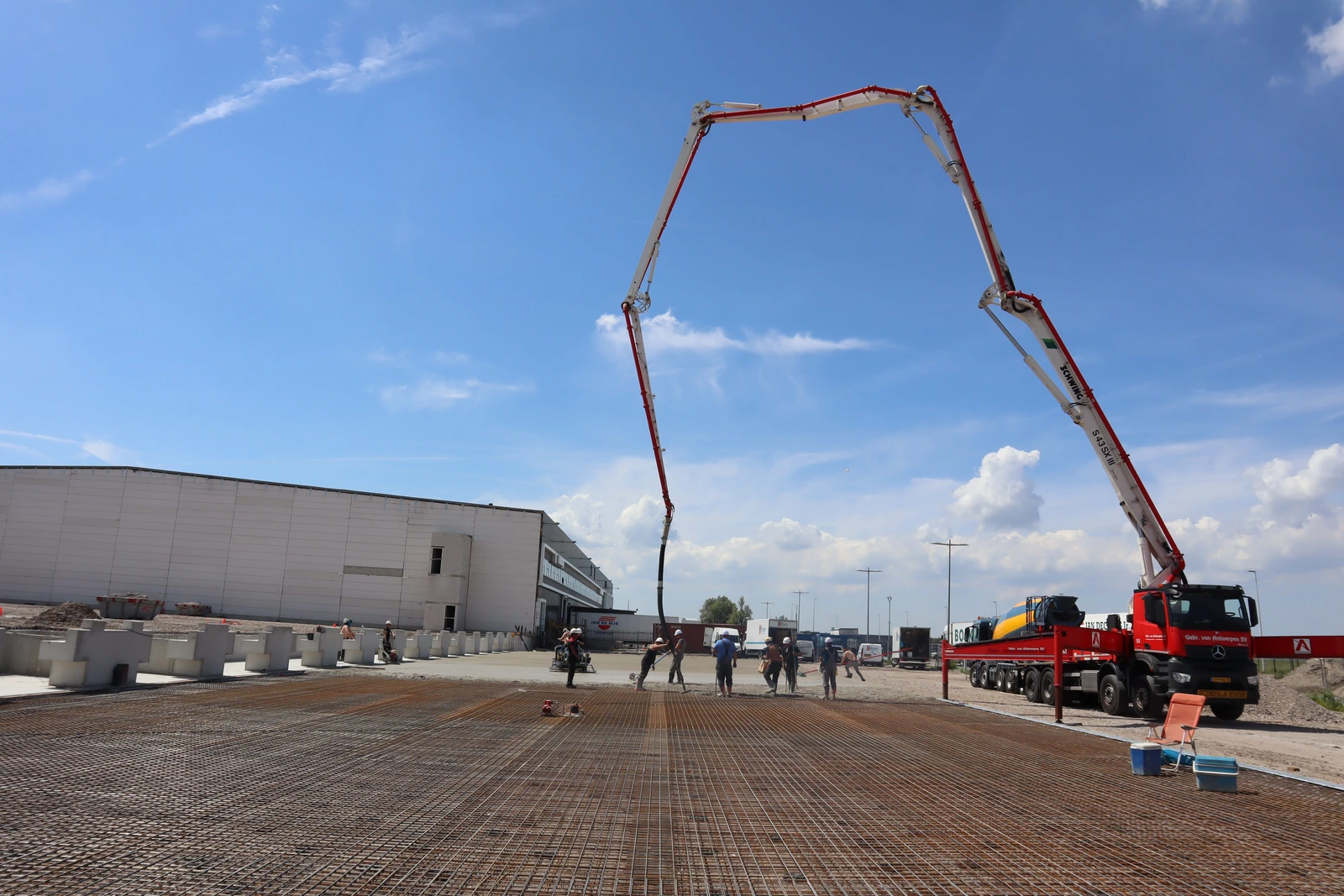
Self-healing concrete being poured for a distribution centre floor near Schiphol, the Netherlands
Photo: Basilisk Self-Healing Concrete
WHY IT MATTERS

Let me explain

In laboratory tests, cracks up to 0.8 mm wide healed, depending on the dosage of the healing agent. This could allow less of the steel reinforcement used to limit crack widths in watertight structures. The first generation of the agent was loaded into porous expanded-clay aggregates. The technology has been tested in full-scale projects in the Netherlands, and the TU Delft spin-off Basilisk develops and markets it (TU Delft; Mors and Jonkers, RILEM Technical Letters).